
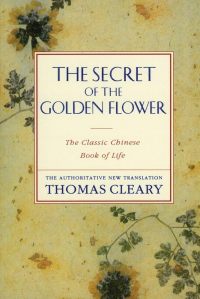
The Mystery of the Golden Flower is an esoteric meditation practice influenced by Chan Buddhism and Taoist alchemical principles. It’s one of the oldest texts, often overlooked, yet incredibly valuable for its profound techniques and visualizations. After many years exploring spiritual practices, particularly since the early days of the pandemic, I found myself delving into the Orthodox Christian tradition, Buddhist teachings, and finally, this Taoist approach—each with its unique perspective. According to Carl Jung’s commentary on Richard Wilhelm’s translation, dedicating one hundred days to consistent practice is believed to lead to a unique form of enlightenment. This inspired me to write a blog about my experiences comparing multiple editions and translations, including Wilhelm’s English version, Thomas Cleary’s translation, and two French editions.
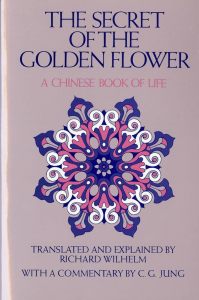
As I began meditating, I initially set a strict routine, almost monastic, which, in retrospect, was counterproductive. Meditation isn’t meant to be timed rigidly; listening to the mind and meditating for a comfortable period, even just ten minutes, proves far more beneficial than forcing a thirty-minute session. Through consistent practice, I found it much more effective to allow the mind to flow naturally. The key is regularity—practicing daily, even if only five or ten minutes—while maintaining an intentional, focused state.
In time, I noticed how lunar phases and their effects on the body’s meridians influenced my sessions. The different translations offered me insights on how energy is intended to flow according to the original instructions. Cleary’s translation describes the energies of Fire, Water, Earth, and Metal as essential elements in circulating life force, or Qi. Mastery over these energies allows us to release certain rigid visualizations, ultimately forming the “Golden Pill,” or “Golden Flower,” as it blossoms within.
After a few weeks, I’ve learned that spontaneity within practice is essential. Although I’m only on my 32nd day, I recommend avoiding distraction and remaining consistent without becoming fixated on the outcome. This path encourages one to focus internally, turning the light inward without expecting immediate results. Initially, I planned to release modular synth videos to illustrate these meditation sessions, but after a few weeks, I realized the practice evolves too organically for a rigid approach in video format. I deeply appreciate the kind comments from viewers and plan to continue sharing these recordings in a more spontaneous, authentic way.
This journey shares roots with alchemy and Taoism, blending awareness and understanding into something that defies easy description. Translating these experiences into music has proven possible. In my videos, the synth setups are consistent from one session to the next, preserving the same energy. Modular synthesizers, with their sensitivity and flexibility, capture the nuanced steps of this inner alchemy—particularly the principle of “Turning the Light Around,” a core element of this practice. The upcoming album Aquatic Archetypes will reflect these influences subtly rather than overtly. By regularly engaging both the body and mind, I’ve found that true mastery becomes attainable, and even when results aren’t immediate, there’s value in adapting and evolving the practice as needed.
Zi
 Zi iacchos
Laisser un commentaire